Our services: Engineering Soverenity
Welcome to Permaenergy. We do not just install solar panels; we deliver Decentralised, Ecologically Integrated Energy infrastructure.
Whether you are seeking to secure a remote agricultural cooperative or adapt a high-density commercial building, our services provide the complete architectural blueprint for community climate change resilience and adaptation. Our technical execution is anchored by fully accredited electrical contracting expertise based in Brisbane, Queensland, specialising in Solar PV, Battery Energy Storage Systems and Energy Efficiency Integration. We bridge this advanced renewable hardware with the regenerative principles of Permaculture to ensure your infrastructure operates in perfect mutualism with the local biosphere.
Global Decentralised Energy Infrastructure
01
Global Decentralised Ecologically Integrated Energy Infrastructure fundamentally evolves the traditional Energy-as-a-Service (EaaS) model. Rather than simply leasing solar hardware or selling units of electricity to passive consumers, this service model delivers comprehensive, end-to-end resource sovereignty. It provides the architectural blueprint, the technical deployment, the regulatory oversight, and the community training required to secure the entire Water-Energy-Food (WEF) Nexus.
Here is a breakdown of how this comprehensive service model is structured and delivered to clients, communities, and institutional partners globally:
1. Whole-Systems Consulting & Base-Load Auditing
The service begins not with hardware, but with ecological and infrastructural analysis.
- Resource Mapping: Conducting on-site or remote environmental audits to map solar potential, prevailing winds, water flows, and agricultural capacity.
- Base-Load Calculation: Shifting clients away from infinite peak-demand modeling. The service calculates the absolute minimum base load required for human security and operational stability, dictating a highly efficient, custom system size.
- WEF Nexus Architecture: Designing the precise biological integrations necessary for the site, such as pairing the energy generation with passive solar greenhouses or phytoremediation systems.
2. Turnkey Modular Engineering & Deployment
This phase transitions the ecological blueprint into physical reality, anchored by premium electrical contracting standards.
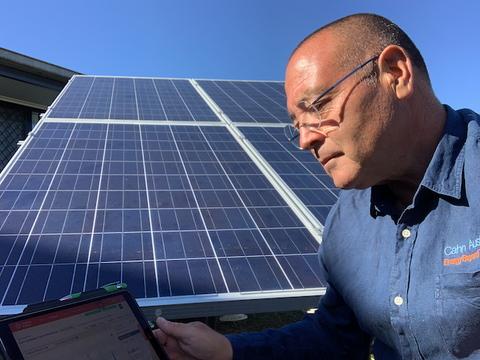
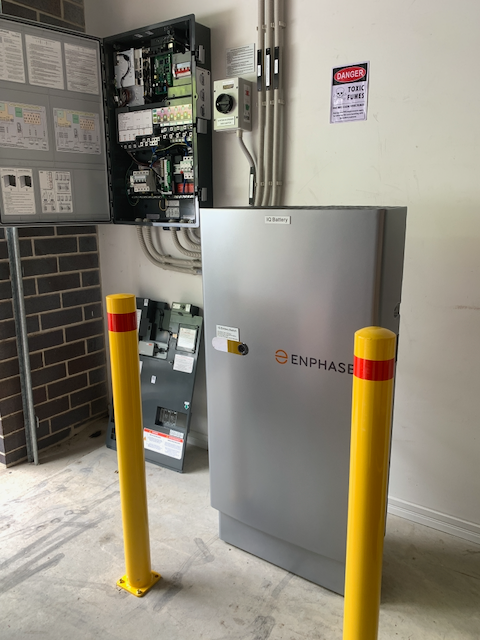
- Standardised Hardware Nodes: Supplying and installing scalable, modular generation units—typically anchoring designs around robust solar photovoltaic (PV) arrays coupled with advanced Battery Energy Storage Systems (BESS).
- Professional Deployment Logistics: Executing the physical build utilizing comprehensive labor rate schedules, specialized tool inventories, and structured deployment timelines to ensure projects remain economically viable and precisely managed from end to end.
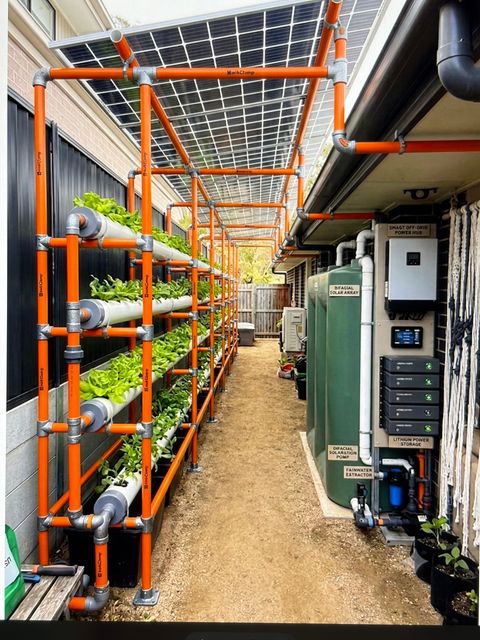
- Agrivoltaic and Water Integration: Physically constructing the dual-use infrastructure, ensuring that structural piping supports both the PV canopy and the underlying agricultural or water-retention systems.
3. Authorized Regulatory Compliance & Safety Assurance
A critical differentiator in this service model is guaranteeing that remote or decentralised microgrids meet the highest echelons of technical safety, rather than treating off-grid installations as unregulated zones.
- Premium Inspection Rigor: Applying the meticulous scrutiny of an authorised regulatory inspector to every global deployment. This ensures that every node meets strict compliance and safety codes.
- Mandatory Testing Protocols: Conducting rigorous pre-commissioning testing, including polarity checks, earth fault loop impedance, and thermal camera inspections, before any system is handed over.
- Legal & Technical Documentation: Providing localized compliance certificates, fire protection guarantees, and final regulatory sign-offs to the client.
4. Capacity Building & Open-Source Handover
The final service pillar ensures that the infrastructure remains decentralized and locally governed, honouring the principle of Subsidiarity.
- Democratic Maintenance Structuring: Facilitating the social transition by helping the community or institution establish local governance committees to manage the infrastructure.
- Technical Training Hubs: Running on-site workshops and establishing permanent research hubs to train local operators on how to monitor, repair, and optimize their microgrid and BESS hardware.
- The Prosumer Transition: Handing over full operational control so the community is no longer reliant on the service provider for basic survival, achieving true resilience and adaptation.
WEF Nexus Engineering
Water-Energy-Food (WEF) Nexus Engineering as a service is to move beyond the traditional role of a solar installer or general contractor. It means operating as a whole-systems architect. Clients are not purchasing solar panels; they are commissioning a complete, intertwined biological and technical ecosystem designed to guarantee localized survival and resource abundance.
As a service, WEF Nexus Engineering is broken down into distinct, actionable deliverables tailored to the specific environment and client scale:
1. Water Security & Solar Integration
This service physically links renewable generation with water capture, filtration, and distribution, ensuring that water systems remain operational independent of centralized grids.
- Infrastructure Modernisation: Engineering solar-powered solutions to modernise existing water infrastructure, such as retrofitting rural community aqueducts with localized PV and BESS to ensure uninterrupted flow.
- Zero-Waste Filtration Systems: Designing integrated hubs that pair peak renewable energy generation with advanced water filtration and heavily insulated cistern storage to mitigate evaporation and secure clean drinking water.
2. Food Sovereignty Architecture
This service decouples agricultural production from fossil-fuel reliance, engineering the physical structures and biological strategies required for localized food security.
- Custom Agricultural Structures: Providing complete technical layouts for passive solar greenhouses and structural designs for shaded hydroponic systems that utilize agrivoltaics (solar panels functioning as crop shade).
- Biological Master Planning: Delivering strategic biological blueprints alongside the hardware, such as designing crop rotation strategies optimized for the specific thermal and light conditions of the engineered structures.
3. Commercial & Hospitality WEF Systems
Expanding the framework to commercial scales, this service targets entities that require both heavy resource consumption and a commitment to ecological integration.
- Resort Integration Programs: Developing comprehensive sustainable farming and energy integration projects for large-scale resorts. This allows the hospitality sector to offset its massive resource footprint by producing its own power and food on-site, operating in mutualism with the local ecology.
4. Multi-Stage Community Master Planning
This is the most comprehensive service, offering end-to-end project management for complete municipal or village-level transformations.
- Phased Development Plans: Designing multi-stage community blueprints that incorporate centralized renewable energy generation, water purification networks, and the establishment of localized community innovation hubs to train residents on system maintenance.
02
International Capacity Building:
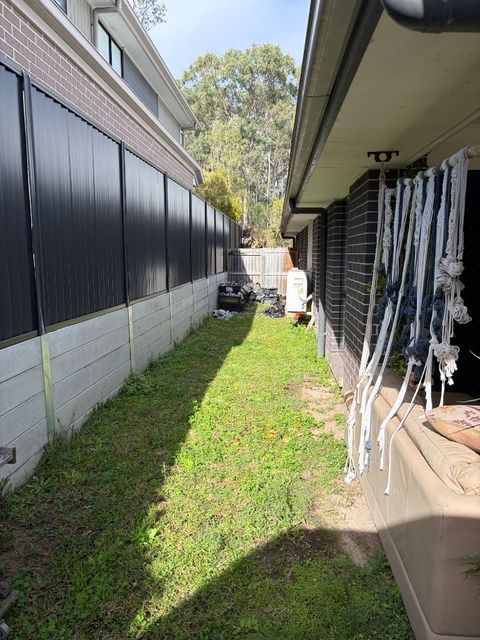
International Capacity Building means Permaenergy is not just exporting technology; it is exporting knowledge, governance, and financial strategy. The goal is to ensure that once a Permaenergy Node is deployed, the local population has the complete technical and structural capacity to independently fund, operate, and scale it.
As a service suite, this is broken down into highly strategic, cross-border deliverables:
1. Institutional Joint Ventures & Research Facilities
Rather than simply installing hardware, this service focuses on embedding the Permaenergy framework directly into local academic and developmental ecosystems.
- University Integration: Developing formal joint venture frameworks and investment briefs to establish Smart Modular Energy System Solution Hubs directly inside international university campuses.
- Dual-Purpose Infrastructure: These installations serve as functioning microgrids for the campus while simultaneously acting as state-of-the-art training anad research facilities for local engineering students, creating a localized pipeline of WEF Nexus experts.
2. Financial Structuring & Development Facilitation
Transforming a visionary infrastructure project into reality requires navigating complex international finance. This service provides the strategic scaffolding needed to secure capital for communities that lack upfront resources.
- Bank & Grant Pitching: Structuring project pipelines, preparing formal expressions of interest, and coordinating high-level funding pitches for regional financial institutions and development banks.
- Investment Briefs: Translating the ecological and technical benefits of a Permaenergy Node into the strict financial and risk-mitigation language required by international investors.
3. Commercial Capacity & Eco-Integration
This service expands the framework's reach by teaching large-scale commercial enterprises how to completely overhaul their resource footprint and train their local workforce in the process.
- Resort & Hospitality Pipelines: Guiding large-scale international resorts through the integration of renewable energy and sustainable farming concepts into their daily operations.
- Workforce Upskilling: Training local commercial staff to manage these integrated WEF systems, which creates a ripple effect of technical proficiency and ecological awareness throughout the broader local economy.
4. Grassroots Technical Training & Governance
To permanently transition marginalized populations from passive consumers to active prosumers, the knowledge of system maintenance must be fully democratised.
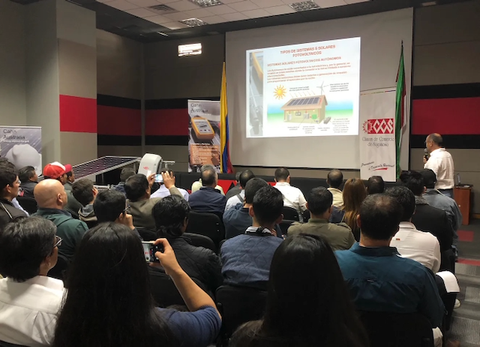
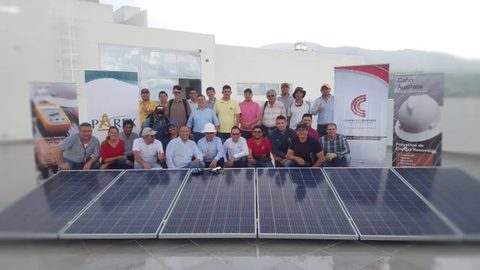
- Hands-On Workshops: Delivering localized training on open-source hardware assembly, basic fault diagnosis, and routine maintenance of solar PV, BESS, and biological filtration systems.
- Democratic Socialization: Leading the community engagement phases required to establish and empower localized democratic maintenance committees, ensuring the infrastructure is protected from elite capture and managed equitably.
03
This is paragraph text. Click it or hit the Manage Text button to change the font, color, size, format, and more. To set up site-wide paragraph and title styles, go to Site Theme.
We get it done
Why Us?
Every project comes with its own needs and challenges. Tell us your priorities, and we'll fill them to your satisfaction.